
If you work in a care home, nursing home, or healthcare service, you already know one thing:
Policies take up more time, energy, and headspace than almost any other part of compliance.
It’s not the writing that drains you. It’s everything around it.
Tracking every regulatory change.
Revisiting documents you thought were “done.”
Wondering whether your policy still aligns with the latest HIQA, CQC, HSE, HSA, NHI, or safeguarding standards.
Trying to update a paragraph without breaking the whole document.
Chasing staff for read receipts on their day off.
And then, when an inspection arrives, scrambling to prove that everything was understood, updated, distributed, and actioned.
It’s not sustainable. And for many care homes, especially smaller, privately-run services, it’s not even realistic.
Which is exactly why policy management for healthcare needs to change.
Why Policy Management Is So Painful (Even for Great Teams)
Most care teams are not struggling because they’re careless.
They’re struggling because they’re buried. In our work with providers across Ireland and the UK, we see the same patterns again and again:
1. Each policy review feels like starting from scratch
Every time a regulation changes, safeguarding, medication, data protection, infection control, staffing requirements, someone must manually scan through tens or hundreds of pages to find what needs updating.
Most teams admit that they’re guessing. Not because they want to, but because tracking everything manually is impossible.
2. Updates get missed during hectic periods
Staffing shortages. Annual leave. New starters. Winter pressures. Unexpected inspections.
The risk is simple: If something changes during a busy month, that update can easily slip through the cracks.
And regulators do not consider “we were understaffed that week” as a valid exemption.
3. No reliable way to know when regulations change
In Ireland alone, providers must keep up with:
HIQA National Standards
Safeguarding requirements
Infection prevention guidance
HSE updates
Irish legislation
Professional guidance
Local authority requirements
HSA regulations (if applicable)
It’s not realistic, nor fair, to expect one Registered Provider, PIC, or admin lead to manually track all of this.
Yet many are.
4. Staff get overwhelmed with policy notifications
One common complaint we hear (especially from nurses and HCAs): “I’m off today. Why am I getting policy reminders?”
This is a morale issue, a culture issue, and a retention issue.
5. It’s hard to prove compliance, even when you know you’re doing the right thing
Paper files, Word documents, shared drives, or scattered emails and systems make it almost impossible to show:
When a policy was last updated
Who read it
What version was active during an incident
Whether updates were made in line with regulatory changes
Teams often know the work was done, but can’t evidence it in a way that satisfies inspectors.
In a regulatory environment tightening across Ireland, the UK, and the EU, this gap becomes dangerous.
Policy Management Was Never Designed for Modern Healthcare
Policies were created for clarity. But the tools used to manage them? They create chaos.
Traditional policy management relies on manual effort:
Manual tracking.
Manual updating.
Manual distribution.
Manual version control.
Manual staff chasing.
And when everything is manual, everything becomes fragile.
That’s why care homes spend hours on tasks that should take minutes. And why errors slip through even in well-run services.
Good people are being buried by bad systems.
A Smarter Way: Policy Management Software That Runs in the Background
This is where Safe Workplace was built differently.
Not as a document storage system. Not as a PDF library.
But as a regulatory intelligence layer that surrounds your policies with automation, intelligence, and connected processes.
Here’s what that actually means in practice.
1. Regulations monitored 24/7: updates only when something actually changes
Instead of checking websites, newsletters, and regulatory portals, Safe Workplace monitors all relevant regulations in the background.
You get notified only when:
A requirement changes
A new standard is published
A policy in your home needs updating
A specific section no longer aligns
This removes guesswork entirely.
It’s like having a compliance analyst working quietly behind the scenes.
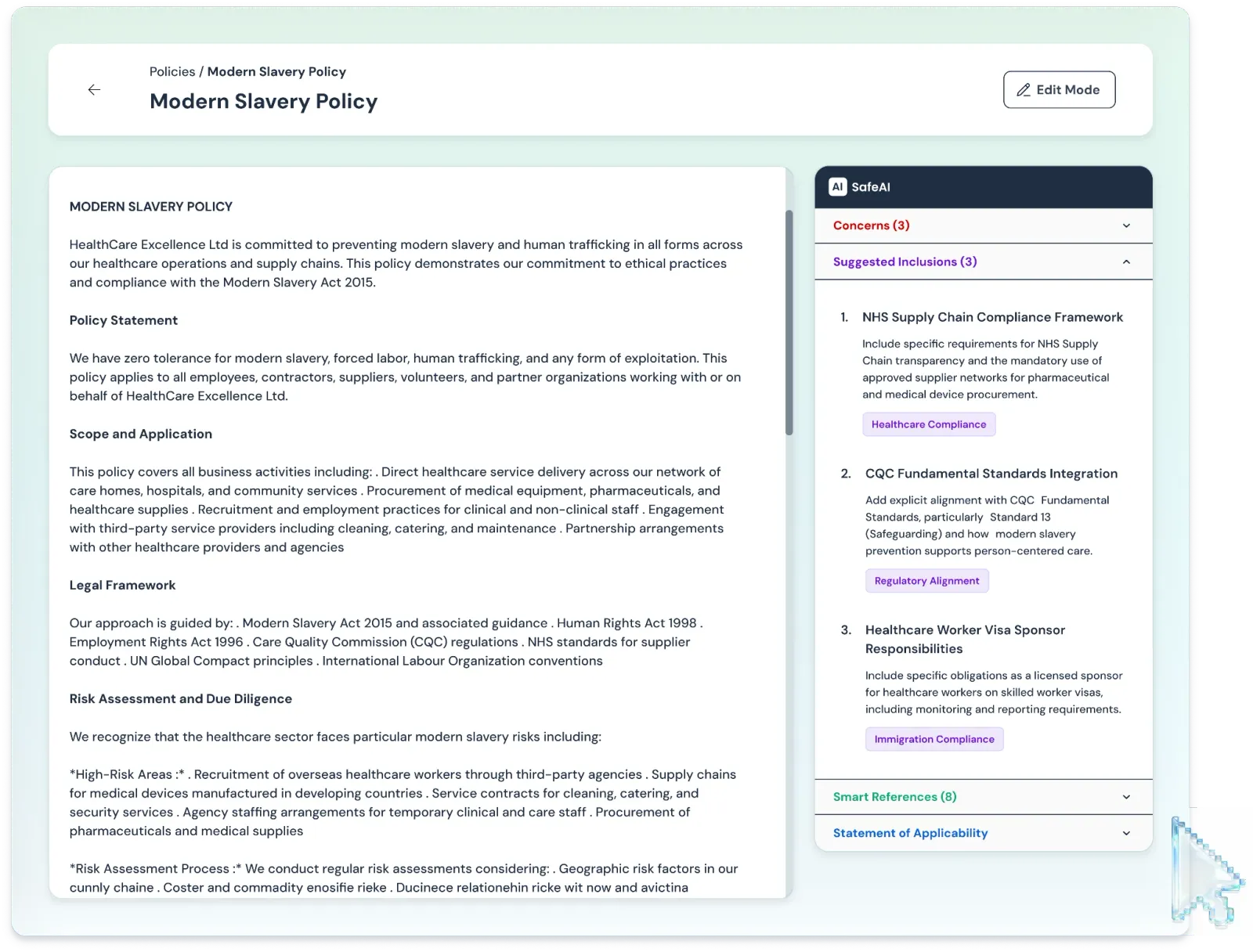
2. AI flags exactly what needs updating, with suggested language
This is the part users say feels “unbelievable.”
When a regulation changes, the system doesn’t just tell you something needs updating.
It tells you:
Which policy
Which section
Why
And what wording is missing or outdated
With one click, you accept updates or adjust them.
This is the difference between manual effort and assisted compliance.
3. Policy versioning happens automatically
No more:
Duplicate files
Wrong versions being used
Staff reading outdated content
Inspectors asking “when was this last updated?”
Every change is logged, time-stamped, and linked to a regulatory reason.
Version history becomes an audit asset and not an admin burden.
4. Notifications respect staff shifts
If your night team, day team, weekend staff, or part-time team receive notifications at the wrong time, it creates frustration.
Our policy notices align with:
Rotas
Work patterns
Assigned modules
Actual availability
Respecting staff time and mental load isn’t just a “nice touch.” It improves culture, reduces resistance, and increases engagement.
5. Compliance evidence is created automatically as you work
This is where most systems fail; they “store documents” but don’t create evidence.
Safe Workplace does.
When you update a policy:
Evidence is tagged
Actions are linked
Training is updated
Audits sync
Risks update automatically
A compliance trail is created instantly
You don’t touch a spreadsheet. You don’t build a report. You don’t chase anything.
The system builds the evidence behind the scenes.
Policy Governance That Actually Runs on Autopilot
Most policy management tools claim to “store documents.” Very few actually help you govern them.
Safe Workplace was built to take over the manual workload that drains care teams, the rewriting, reformatting, chasing, scheduling, tracking, approving, evidencing, and distributing.
Here’s how it works in the real world:
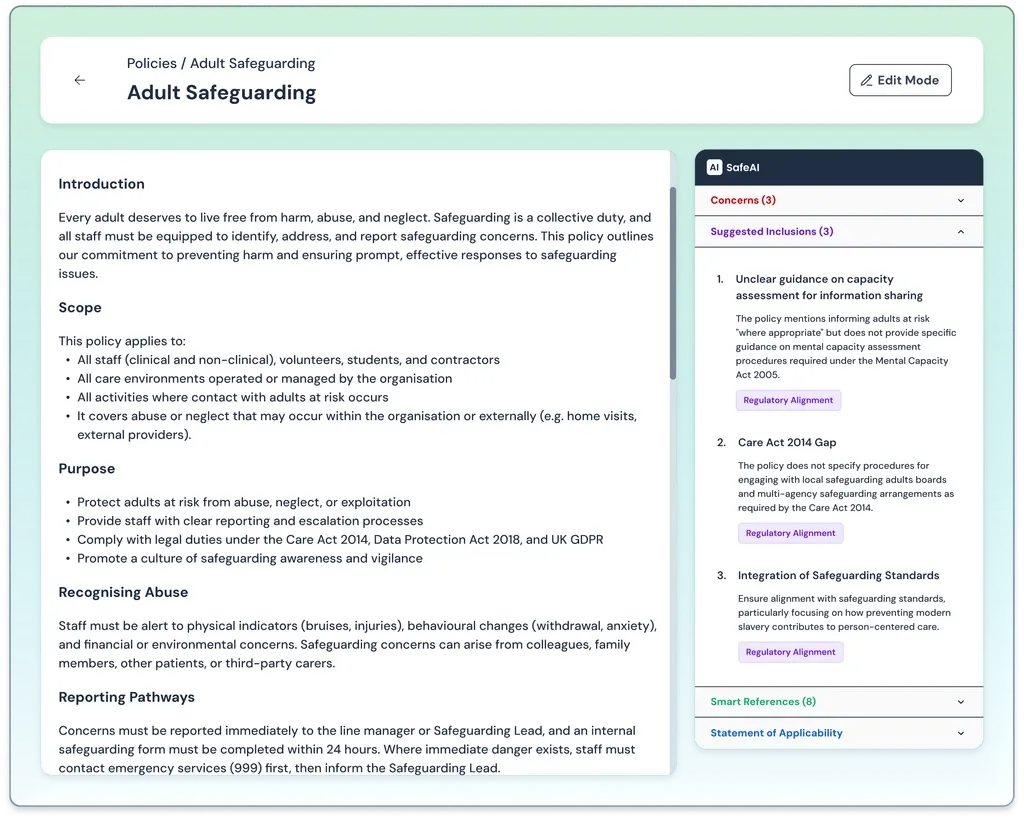
1. Creating and Updating Policies Becomes Effortless
Instead of starting from a blank page, reworking Word templates, or manually formatting documents, policy creation becomes fast and structured.
You can craft policies up to 10x faster, supported by:
A rich-text editor designed for healthcare governance
Built-in spell-checking, formatting, and structure
The ability to link content directly to controls and standards
Automated policy scheduling so reviews happen on autopilot
You don’t just write faster — you write with context, clarity, and regulatory alignment already built in.
2. Approvals and Staff Acknowledgements Run Themselves
One of the biggest time drains for care leaders is chasing people:
“Can you review this?”
“Have you signed this?”
“Can you confirm you’ve read it?”
Safe Workplace removes that entire layer of admin.
The policy management system:
Routes each policy through multi-step approvals
Sends automated notifications for updates and required sign-offs
Tracks signatures, completions, and overdue actions
Creates a complete audit trail of who did what and when
It’s governance that happens in the background without interrupting your day.
3. Policies Become Easy for Staff to Find, Understand, and Follow
When policies live in email threads, shared drives, folders, or personal PCs, nobody trusts that they’re reading the right version.
With Safe Workplace, your library becomes:
Fully centralised
Searchable
Role-based
Filterable by department and permissions
Accessible on mobile and desktop
Staff get what they need instantly. Leaders get confidence that everyone is always reading the latest version.
4. Policies Connect Automatically to Your Wider Governance System
This is the part that turns policies from “documents we store” into living governance assets.
Every policy links directly to:
So when something changes in your service, a training gap, a recurring incident, a new risk theme, the system helps you triangulate whether your policies need to be reviewed.
This creates a loop of continuous learning, not continuous chasing.
What This Means for Care Home Leaders
Less time reviewing and rewriting
No more searching through 30 pages to find what changed. Updates come pre-highlighted.
Less chasing staff
Notifications run on schedule, without disrupting days off.
More confidence during inspections
Everything is traceable, evidenced, and aligned to the latest standards.
A stronger culture of governance
Staff know exactly what’s expected of them, leaders have transparency and quality teams have real oversight.
A system that scales with you
Whether you’re a single home or a group, policy consistency becomes effortless.
Why Care Homes in Ireland, EU & UK Are Choosing Safe Workplace
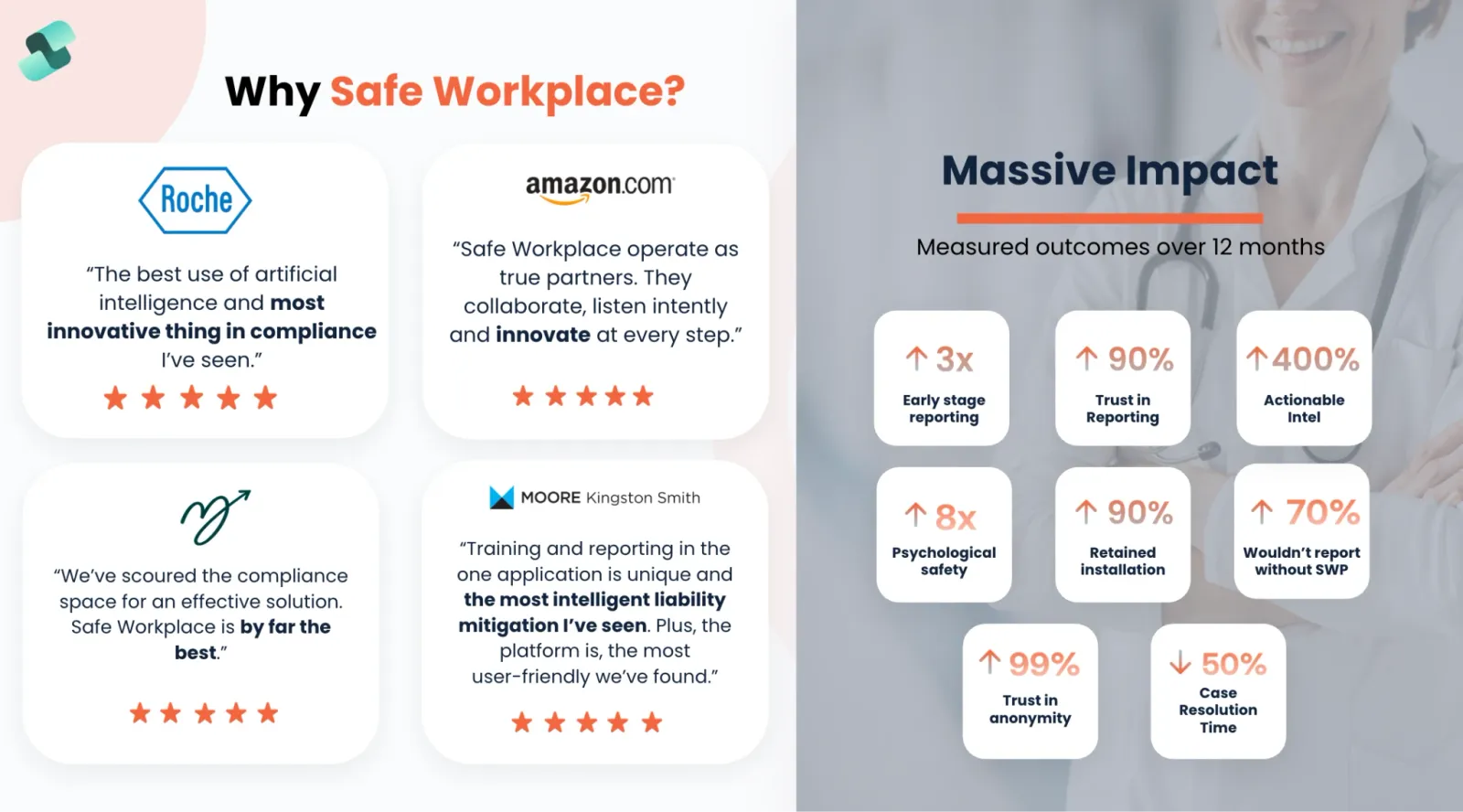
More care homes want to fix policy management before anything else.
Why?
Because policies are the backbone of every inspection, every incident, every audit, and every risk assessment.
When policies are strong, everything else becomes easier. When policies are automated, everything else becomes faster.
Ready to See How This Works in Practice?

If policy management is consuming too much of your time or if you want to enter 2026 with a cleaner, clearer, smarter system, we’d be happy to walk you through it. Book a demo with our team or explore the full Policy Management module
Your team deserves to focus on care, not admin.
Your policies should support that — not slow you down.
Let’s make compliance simpler, safer, and far less stressful.
Sources: Health and Social Care Act 2008 (Regulated Activities) Regulations 2014; CQC, the assessment framework. Last reviewed: 30 July 2026.