

Choosing the right healthcare software can feel overwhelming, depending on your needs. Whether you're looking for quality management software, EHR software, or telehealth software.
With countless options on the market, it's difficult to know which platform will truly streamline your operations, ensure compliance, and improve patient care.
This guide cuts through the noise. We'll explore the top healthcare software solutions by category, giving you the clarity and confidence to select the system that best fits your organisation's unique needs.
How to Choose the Right Healthcare Software for Your Organisation
A strategic approach is essential when choosing a software partner. Before diving into features and demos, it's important to understand your internal needs and establish clear criteria for your decision. This ensures you invest in a solution that solves today's challenges and scales for tomorrow's growth.
Identify your primary challenge first. Are you struggling with preparing for regulatory audits, managing patient billing efficiently, or unifying clinical records? Pinpointing your main pain point will narrow your search to the most relevant software category.
Could you evaluate integration capabilities? The best software works seamlessly with your existing systems. Confirm that any new platform can integrate with your current EHR, billing software, or lab systems to avoid creating data silos.
Prioritise security and compliance. In healthcare, data security is non-negotiable. Ensure any potential software is fully compliant with regulations like GDPR and HIPAA and has robust security protocols to protect sensitive patient information.
Consider the total cost of ownership. The initial price tag is only part of the story. Factor in costs for implementation, staff training, ongoing support, and potential upgrades to understand the true long-term investment.
Always request a live demo. A personalised demonstration is the best way to see the software in action and determine if its workflow and user interface are a good fit for your team.
Key Software Categories in Healthcare Explained
Understanding the main types of healthcare software is the first step in finding the right solution. While some platforms offer all-in-one capabilities, most specialise in a specific area:
EHR/EMR (Electronic Health/Medical Record): These systems are the digital heart of clinical operations. They are designed for managing patient charts, treatment histories, diagnoses, and other critical clinical data in a digital format.
Practice Management Software (PMS): This category focuses on the administrative and financial side of a healthcare practice. Key functions include patient scheduling, insurance verification, medical billing, and generating financial reports.
Quality, Risk & Compliance (QRC): QRC platforms like Safe Workplace are built to help healthcare organisations navigate the complex landscape of regulations and quality standards. They provide tools for managing audits, reporting, and managing incidents, tracking policies, and mitigating risks.
Telehealth Software: Accelerated by the need for remote care, telehealth platforms facilitate virtual consultations between patients and providers through secure video calls, messaging, and remote monitoring tools.
The Top Healthcare Software Solutions by Category for 2026
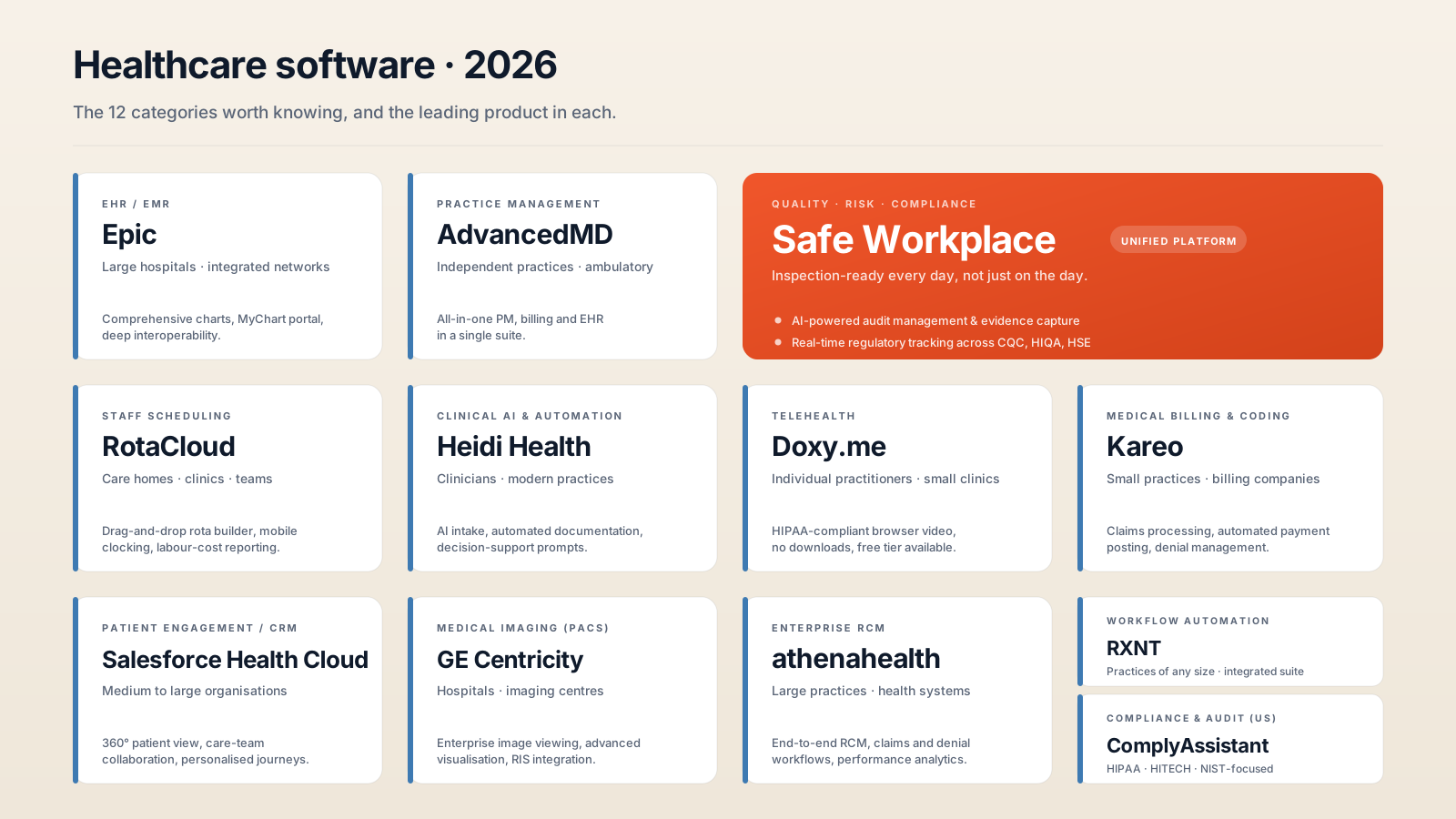
After reviewing the market, we've identified the top-performing software solutions across the most critical healthcare categories. This list is structured by function to help you quickly find the right tool for your specific challenge.
1. Best for Electronic Health Records (EHR): Epic
Epic is a dominant force in the EHR space, particularly for large hospitals and integrated health networks. Its comprehensive platform is designed to manage the full spectrum of clinical data. Key features include detailed patient charts, customisable clinical workflows, and a robust patient portal called MyChart. Epic stands out due to its deep customisation options and extensive interoperability, allowing it to serve as the central data hub for complex healthcare ecosystems.
2. Best for Practice Management (PMS): AdvancedMD
AdvancedMD is an excellent choice for independent practices and ambulatory care clinics looking for an all-in-one solution. The platform tightly integrates practice management, medical billing, and EHR functionalities into a single, unified suite. Its core features cover everything from appointment scheduling and insurance eligibility checks to claims management and reporting. The platform is known for its comprehensive feature set that helps smaller practices operate with the efficiency of larger organisations.
3. Best for Unified Quality, Risk & Compliance: Safe Workplace
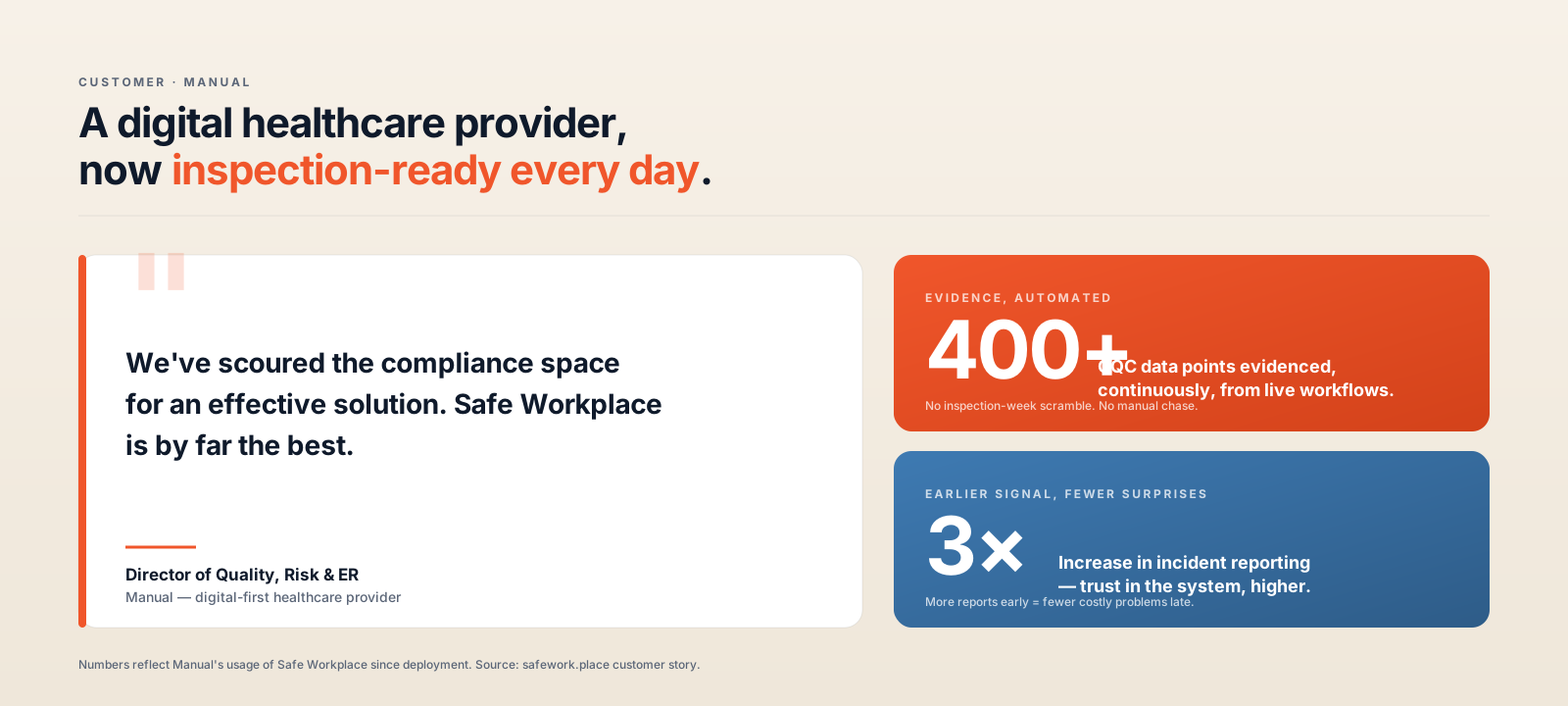
For healthcare providers who need to be inspection-ready at all times, Safe Workplace offers a modern, unified solution. Our platform is perfect for managing the complexities of quality, risk, and compliance. Our standout features include AI-powered audit management that simplifies preparation, streamlined incident reporting, and real-time regulatory tracking. What truly sets us apart is our ability to unite all QRC data and processes into one single platform, removing guesswork and providing ultimate clarity. See how to unite your compliance data confidently.
4. Best for Staff Scheduling: RotaCloud
RotaCloud is ideal for Care homes, clinics, and healthcare teams struggling with manual rota planning and staff management. Key features include a drag-and-drop rota builder, leave management, a time clocking app, and labour cost reporting. It drastically reduces the time spent on scheduling while improving communication and giving staff more control over their shifts via a mobile app.
5. Best for Clinical AI & Automation: Heidi Health
Heidi Health is ideal for clinicians and practices looking to reduce the administrative burden of patient consultations. Key features include AI-driven patient intake and history taking, automated clinical documentation, and decision support tools. It acts as an AI assistant for doctors, automating routine documentation so they can focus more on patient interaction and complex decision-making.
6. Best for Telehealth: Doxy.me
Doxy.me has gained popularity for its simplicity and accessibility, making it an excellent telehealth solution for individual practitioners and small clinics. The platform offers secure, high-quality video calls directly in a web browser, meaning no downloads are required for patients or providers. Its core features include a virtual patient queue, screen sharing, and a simple, intuitive interface. The platform's major advantage is its free, HIPAA-compliant version, which removes the financial barrier to offering virtual care.
7. Best for Medical Billing & Coding: Kareo
Kareo is specifically designed to meet the needs of small practices and independent medical billing companies. The software simplifies the often-complex billing process with a clean, user-friendly interface. Its key features include claims processing and tracking, automated payment posting, and robust denial management tools to help practices maximise their revenue. Kareo is praised for making powerful billing tools accessible and manageable for practices without a dedicated billing department.
8. Best for Patient Engagement & CRM: Salesforce Health Cloud
Salesforce Health Cloud is ideal for medium to large healthcare organisations focused on building personalised patient relationships and journeys. Key features include 360-degree patient view, care team collaboration tools, and personalised patient communication workflows.It brings the power of enterprise-level CRM to healthcare, enabling providers to manage patient relationships with the same sophistication as leading customer-centric industries.
9. Best for Medical Imaging (PACS): GE HealthCare Centricity PACS
Hospitals and diagnostic imaging centres requiring a robust system for managing medical images use GE Healthcare Centricity. Key features include enterprise-wide image viewing, advanced visualisation tools, and integration with radiology information systems (RIS). The brand is A long-standing leader known for its reliability, scalability, and advanced diagnostic tools that support clinical confidence.
10. Best for Enterprise Revenue Cycle Management (RCM): athenahealth
Athenahealth is built for large practices and health systems that want to outsource and optimise their entire revenue cycle. The platform includes an end-to-end service covering claims management, denial resolution, and performance analytics. It combines powerful software with expert services, leveraging data from its vast network to proactively identify and fix billing issues, improving collection rates.
11. Best for Integrated Clinical + Administrative Workflow Automation: RXNT
RXNT delivers award-winning, AI-powered healthcare software designed to help medical practices of any size or specialty streamline operations and scale with confidence. Its intuitive, fully connected suite of practice management, EHR, and e-prescribing solutions automates time-consuming administrative workflows, such as prescription refills, clinical documentation, scheduling, and claims processing.
By reducing manual work and simplifying day-to-day operations, RXNT enables providers and staff to reclaim up to 70% more time in their day, improve accuracy and compliance, and focus more on delivering high-quality patient care.
12. Best for Healthcare Compliance & Audit Management: ComplyAssistant
ComplyAssistant is a dedicated healthcare audit management software platform designed to help organisations manage compliance across complex regulatory frameworks. It supports risk assessments, audit workflows, and policy tracking, particularly for organisations navigating HIPAA, HITECH, and NIST requirements. ComplyAssistant is best suited to US-based healthcare organisations that need a structured, centralised approach to compliance governance and audit readiness.
13. Best for ABA Practice Management: Theralytics
Theralytics is designed specifically for ABA practices that need to streamline clinical, administrative, and billing workflows in one platform. It combines real-time data collection, automated graphing, scheduling, clinical documentation, billing, and claims processing to help ABA providers manage their practices more efficiently. With centralised dashboards and connected workflows, Theralytics helps BCBAs, clinicians, and practice administrators keep clinical and operational information organised in one place.
A Quick Comparison Table of Top Healthcare Software
Software Name | Best For | Key Focus | Starting Price |
|---|---|---|---|
Epic | Large hospitals & health systems | Comprehensive EHR & Clinical Data | By Quote |
AdvancedMD | Independent practices | All-in-One PMS & EHR | By Quote |
Safe Workplace | Compliance-focused providers | Unified Quality, Risk & Compliance | By Quote |
Doxy.me | Individual practitioners & small clinics | Simple, Secure Telehealth | Free Version Available |
Kareo | Small practices & medical billers | Medical Billing & Claims Management | By Quote |
RotaCloud | Care homes, clinics, teams | Staff Scheduling & Rota Planning | From ~£10/mo/user |
Heidi Health | Clinicians & modern practices | AI-Powered Clinical Automation | By Quote |
Salesforce Health Cloud | Medium to large organisations | Patient Relationship Management (CRM) | By Quote |
GE Centricity PACS | Hospitals & imaging centres | Medical Imaging (PACS/RIS) | By Quote |
athenahealth | Large practices & health systems | Full-Service RCM | % of Collections |
RXNT | Practices of any size or speciality | All-in-one, integrated EHR, PM, and ERX software | From $118/month |
ComplyAssistant | US-based healthcare organisations | Healthcare Audit & Compliance Management | By Quote |
Theralytics | ABA practices & BCBAs | ABA Practice Management | By Quote |
Frequently Asked Questions About Healthcare Software
What is the difference between EMR and EHR software?
An Electronic Medical Record (EMR) is a digital version of a patient's paper chart from a single practice. An Electronic Health Record (EHR) is more comprehensive; it contains a patient's overall health data and is designed to be shared across different healthcare providers, such as labs and specialists.
How much does healthcare software typically cost?
Costs vary dramatically based on the type of software, the size of your organisation, and the features required. Simple telehealth solutions may offer free plans, while comprehensive EHR and QRC systems for large hospitals can be a significant investment. Most providers offer custom pricing based on your needs.
Is cloud-based healthcare software secure enough for patient data?
Yes. Reputable cloud-based software providers invest heavily in security measures that often exceed what a single practice could implement on its own. They use advanced encryption, secure data centres, and undergo regular third-party audits to ensure they meet HIPAA and other regulatory standards.
What is the most important factor when choosing a healthcare software provider?
While features are important, the provider's commitment to customer support and implementation is arguably the most critical factor. A great product with poor support can lead to failed adoption. Look for a partner with a proven track record, dedicated support teams, and a smooth onboarding process.
How long does it take to implement a new healthcare software system?
Implementation timelines can range from a few hours for a simple telehealth tool to several months for a complex EHR system across a multi-location hospital. The timeline depends on data migration needs, staff training requirements, and the level of customisation involved.
Making the right software choice empowers your team to focus on what matters most: delivering exceptional patient care. By unifying your data and automating workflows, you can move from reactive problem-solving to proactive quality improvement. The AI-powered QRC platform from Safe Workplace is trusted by healthcare providers across the UK, US, and SA to ensure they are always inspection-ready. Unite your data. Secure your demo today.